
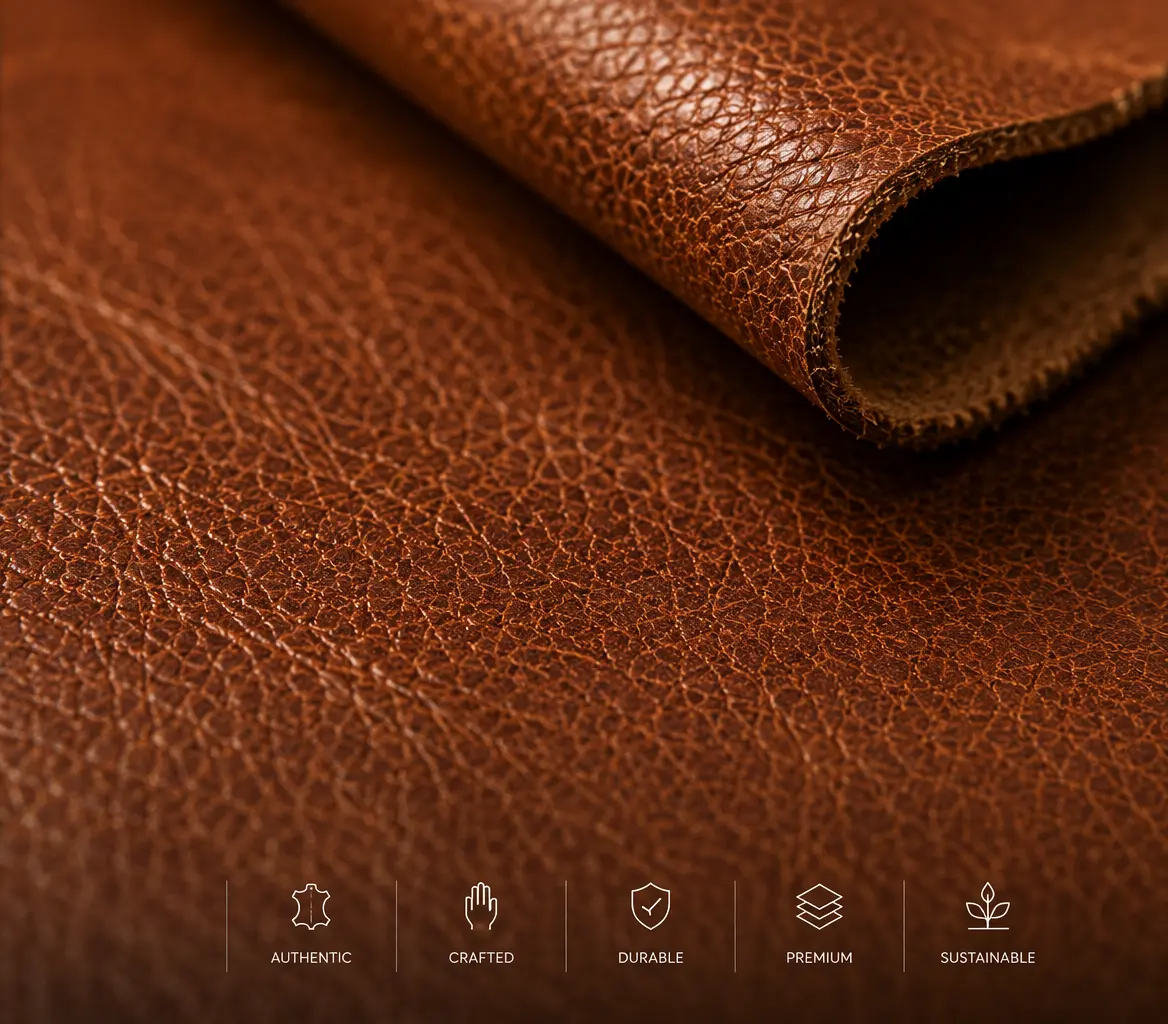
Crust leather sits between tanning and final finishing. For manufacturers, it is often the form purchased for colour, embossing or coating in-house. Understanding grades and thickness avoids expensive surprises on the cutting table.
What “crust” actually means
After tanning and drying, leather may be sold as crust—stable, workable and unfinished relative to a consumer end product. Buyers specify tannage, thickness and selection criteria so their own finishing line can create a consistent hand and colour.
How grades are communicated
Grade language varies by supplier and market. In practice, graders look for scars, insect damage, vein marks, growth marks and hole density. Top selections deliver cleaner cutting for large panels; commercial grades remain valuable where pattern pieces tolerate character.
Grade is not a moral ranking—it is a cutting map for yield and surface.
Thickness, yield and cutting
Thickness targets affect stitch allowance, edge finishing and whether a construction needs splitting. Under-thickness shows up later as stretch or unevenness; over-thickness wastes finishing time and can fight fine silhouettes.
Inspection habits that prevent waste
Receive lots with light tables or standardised daylight. Spot check across sides, not only the face you were shown. Agree defect definitions in writing before the first container.
Pairing crust with your line
If you are sourcing crust for production, review Premium Leather Crust and the regional context in Why Bangladesh is becoming a Global Leather Hub. For quotes, contact sales.