
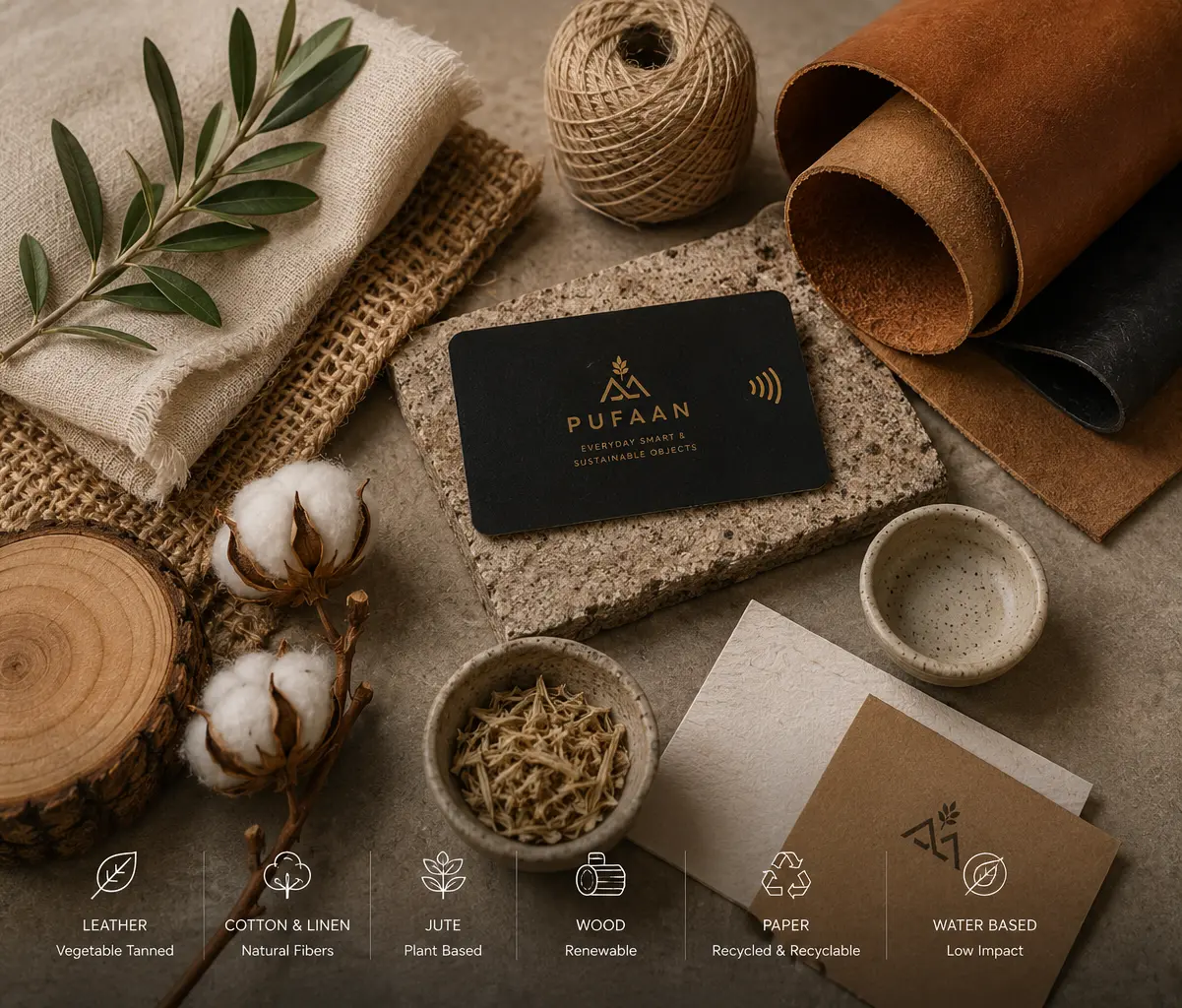
Everyday objects set the texture of a day—keys, cards, bags, tools on a desk. When those objects are disposable or noisy with features, the day becomes noisier too. Sustainable design starts by asking what deserves to stay.
Everyday objects set the tone
Objects you touch every day teach habits. A wallet that splits after a season teaches replacement. A card that updates without reprinting teaches maintenance. Quiet, lasting tools make better defaults.
Longevity is a design feature
Longevity is not nostalgia. It is engineering for abrasion, pocket sweat, bag corners and honest aging. Surfaces can develop character without failing. Fast chic that peels in months is a different product category entirely.
If an object cannot survive daily life, it was never designed for everyday.
Materials you can live with
Materials should be honest about what they are. For leather programmes, that includes understanding crust and grades before colour and finish. For smart objects, it means choosing construction that does not feel temporary.
Less noise, more usefulness
Feature lists expand until the object loses its job. Sustainable everyday design often removes more than it adds: one clear destination on a card, one reliable finish, packaging that protects without theatre.
What Pufaan optimises for
Pufaan’s brief is simple: smart enough to stay useful, quiet enough to live with. Start with the shop, then read Behind the Design of Pufaan.